Geographic Isolation and Language Evolution
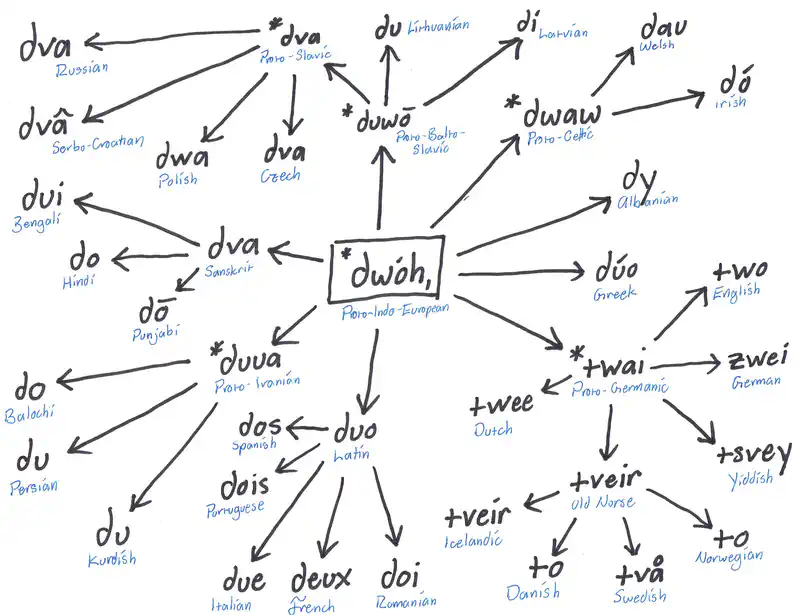
When Proto-Indo-European (PIE) split into its daughter languages, geographic barriers played a crucial role. Mountain ranges, rivers, and valleys didn’t just separate people—they created unique linguistic environments that shaped how languages evolved.
Real-World Examples
The Rhine Consonant Shift
The High German consonant shift, occurring around 500 CE, shows how geographic isolation affects language:
PIE *p > Germanic *f > High German pf
- PIE *pōds > English “foot” > German “Pfote”
- PIE *pod > English “pod” > German “Pfad”
This shift primarily occurred in the mountainous regions of southern Germany, while northern lowland regions maintained the original sounds.
Valley Effects on Phonology
1. Echo Acoustics
In valley environments, certain sounds carry better:
- Open vowels tend to become more closed
- Stops may develop into affricates
- Tone systems might develop for clarity
Example Evolution:
Original: katu (mountain)
Valley Form: katʃu
Highland Form: katu
2. Isolation Patterns
Different valleys often develop distinct features:
Valley A:
PIE *bʰer- (to carry)
> *ber
> ber (to carry)
Valley B:
PIE *bʰer-
> *fer
> fer (to carry)
Creating Realistic Language Families
Mountain Range Example
Starting with a proto-language:
Proto-Form: *kawta (height)
Northern Valley: kofta
Southern Valley: xauta
Highland: kawta
Lowland: kata
Each variation follows logical sound changes based on:
- Altitude
- Isolation level
- Contact with other groups
Practical Application in Worldbuilding
Creating Valley Dialects
- Start with proto-form
- Apply consistent sound changes
- Consider geographic features:
River Valley: Favors flowing sounds (l, r)
Mountain Peak: Favors stops (k, t, p)
Coastal Area: May preserve older forms
Sound Change Examples
Proto-word: *terkʷos (to turn)
Highland Dialect: terkos
Valley Dialect: terχos
Coastal Dialect: tertos
Common Mistakes to Avoid
- Random sound changes without geographic logic
- Ignoring trade route influences
- Forgetting about language contact
- Inconsistent evolution patterns
Resources for Further Study
- The Database of Indo-European Roots (online)
- Wiktionary’s PIE Index
- r/conlangs community examples
- WALS (World Atlas of Language Structures)
Technical Tools
For tracking sound changes:
# SCA Format Example
p > f / #_
k > x / V_V
Conclusion
Geographic isolation doesn’t just separate languages—it actively shapes them. By understanding how real-world languages evolved in valley systems, we can create more convincing and naturalistic conlangs for our worlds.
Useful Online Resources:
Communities:
- r/conlangs
- The Zompist Bulletin Board
- CBB Language Construction Forum